Table of Content 17
- In short
- The rules
- The odds for each card
- How multipliers and the house edge work
- Practical habits
- Reading the first card
- A worked example of a chain
- Setting a budget for HiLo
- HiLo and the law in Zambia
- Common HiLo mistakes
- Playing HiLo on a phone
- Is HiLo fair?
- Reading the RTP on the rules screen
- Planning a HiLo session
- When to stop playing
- Similar instant games
- Mobile casinos with instant games
In short
-
Extremes are safe
After a 2, a higher card wins 11 times in 13 on a fresh deck. The payout is small to match.
-
7 is a coin flip
Middle cards give near-even odds and bigger multipliers.
-
Chains compound risk
Every extra guess risks everything you have built so far.
The rules
- Place a stake A card is dealt face up as the starting card.
- Guess higher or lower The game shows the chance and multiplier for each choice. Many versions also let you skip a card.
- Win or lose A correct guess multiplies your stake, and the new card becomes the reference. A wrong guess ends the round.
- Continue or collect After each win you choose to keep going or take the current amount.
Cards rank ace (1), 2 to 10, jack (11), queen (12) and king (13). Suits do not count. What happens when the next card has the same rank varies by game: some count it as a loss, while others offer a separate same-rank bet. Check the rules screen.
The odds for each card
Most casino HiLo games, including provably fair ones, draw each card from a full, freshly shuffled deck. That makes the odds simple: they depend only on the card showing.
| Card showing | Chance higher | Chance lower |
|---|---|---|
| Ace | 12 in 13 (92%) | 0 |
| 2 | 11 in 13 (85%) | 1 in 13 (8%) |
| 4 | 9 in 13 (69%) | 3 in 13 (23%) |
| 7 | 6 in 13 (46%) | 6 in 13 (46%) |
| 10 | 3 in 13 (23%) | 9 in 13 (69%) |
| Queen | 1 in 13 (8%) | 11 in 13 (85%) |
| King | 0 | 12 in 13 (92%) |
Single card drawn from a full 52-card deck; same-rank cards (1 in 13) are excluded from both columns
How multipliers and the house edge work
The payout for each guess is roughly the inverse of its chance, minus the house edge. A guess with a 50% chance might pay about 1.9x instead of 2x, while a 92% guess pays only a little over 1x. Chained guesses multiply. Three correct guesses at about 1.9x each turn K100 into roughly K690, but the chance of getting all three right is about one in eight when each guess is close to a coin flip.
The house edge applies to every guess, so a long chain does not escape it. Safe guesses on extreme cards pay so little that they barely move your total.
Practical habits
- Decide a collect point before the round, such as a target multiplier or a number of correct guesses.
- Use skip where the game allows it, to move past middle cards you do not want to bet on.
- Keep stakes flat. Raising stakes after a loss does not change the odds.
- Ignore streaks. On a fresh-deck game, a run of high cards says nothing about the next one.
Reading the first card
Every HiLo round starts with the card on the table, and that card sets both odds. A low card such as an ace or a 2 makes a higher guess very likely, while a queen or king makes a lower guess very likely. The game prices each side to match, so the likely guess pays a small multiplier and the unlikely guess pays a large one.
The middle of the deck is different. A 6, 7 or 8 leaves the two sides close to level, so the multipliers on both are similar. HiLo gives you a choice between a safe guess with a small gain and a risky guess with a bigger gain, and the card showing decides which is which.
The rank of the card is all that counts. Suits have no effect on the odds, and a red card is no more likely to be followed by a high card than a black one.
A worked example of a chain
Take a game that deals from a full deck each time and shows a 7. The chance of a higher card is 6 in 13 and the chance of a lower card is also 6 in 13, so either guess wins about 46% of the time. Two correct guesses in a row at those odds happen about 21% of the time, or roughly one chain in five.
Now compare a chain of safe guesses. An ace followed by a 2, with a higher guess each time, wins often, but each step pays little. The chain grows slowly and every step still carries the house edge. Safe guesses lower the chance of losing a round, but they do not remove the margin built into the multiplier.
The practical point is that a longer chain is always a smaller probability. You can see the chance of success on screen before each guess, so use that figure rather than a feeling that a streak is due to continue.
Setting a budget for HiLo
HiLo rounds are quick, which makes it easy to lose track of how much you have staked. Set your session budget in Zambian Kwacha before the first round and decide a stake that is a small part of it. A flat stake keeps each round independent, and a loss does not call for a bigger bet next time.
Write down two numbers before you start: the most you will lose and the point at which you will stop after a good run. When either number is reached, end the session. Do not add more money to chase a loss, because the odds in the next round are the same whatever happened in the last one.
HiLo and the law in Zambia
Gambling in Zambia is governed by Betting Control Act, Chapter 166 of the Laws of Zambia, as amended by Act No. 50 of 2021. That is the legal text to read for the rules that apply to gambling in the country. A game format such as HiLo does not change those rules, so keep your play within them.
You must be an adult to gamble, and the guide's facts above carry that reminder for a reason. If play stops being enjoyable, take a break and speak to someone you trust. Gamble responsibly.
Common HiLo mistakes
- Chasing a lost chain. After a wrong guess the round ends, and raising the next stake does not recover it.
- Betting on the same card type every time. The odds change with each card, so a fixed habit ignores the figures on screen.
- Treating a streak as a pattern. In a game that shuffles a full deck for each card, earlier cards tell you nothing about the next one.
- Skipping the rules screen. The treatment of a same-rank card, the multipliers and the stated RTP can differ between versions of HiLo.
Playing HiLo on a phone
HiLo suits a phone because it needs only two buttons and a card display. Rounds are short, and most versions let you collect with one tap after a win. Check the screen before you confirm a guess, as it is easy to tap the wrong side on a small display.
Look at the game's rules or info panel before you stake real money. It lists the multipliers, the same-rank rule and the RTP where the game shows one. Those details differ by version, so the numbers in this guide are a starting point and the screen in front of you is the final word.
Is HiLo fair?
HiLo is fair when the card order is random and the multipliers match the odds shown on screen. Casino versions use a random number generator to pick each card. Provably fair versions go further, and provably fair dice and how randomness is verified explains the same check on another instant game. The check lets you confirm after a round that the card was not changed once you made your guess.
A fairness check does not remove the house edge. The edge sits in the multipliers, not in the card order. HiLo can be fully random and still pay slightly less than the true odds on every guess.
Licensed operators also use games that independent labs have tested, and the rules screen often names the studio behind the version you play. If a lobby does not show who made the game or what it returns, treat that as a reason to pick another title.
Reading the RTP on the rules screen
RTP is the share of all stakes a game pays back to players over a very large number of rounds. A HiLo version that states 97% returns about K97 for every K100 staked over that long run. It says nothing about one session, which can end well above or well below that figure.
The RTP also tells you the size of the house edge, because the edge is what remains. A game at 97% has an edge of about 3%. To see how HiLo compares with slots and table games on return, read the highest RTP mobile casino games.
Look for the figure in the rules or info panel before you stake. If two versions of HiLo are available, the one that states the higher RTP costs you less over time, all else being equal.
Planning a HiLo session
HiLo rewards a plan made before the first card. Decide your stake, your session budget and your collect rule in advance, and write them down if that helps. A plan stops a good run from turning into a bigger stake and a bad run from turning into a chase.
Short rounds mean many decisions in a few minutes. For ideas on cutting the risk of each decision, see HiLo risk reduction strategies. Those habits fit the rules explained in this guide.
A simple rule is to collect after one or two correct guesses and begin a new round. That keeps the chance of finishing each chain high. It also keeps the house edge working on a smaller number of guesses per round, though the edge never goes away.
When to stop playing
Stop when you reach the loss limit you set, even if the last few cards felt close. HiLo shows you the chance of each guess, and none of those chances improve because you have lost. The next card is independent of how much you want the money back.
Other signs are playing for longer than you planned, staking money meant for bills and feeling that one more round will fix the session. If any of these apply, take a break. The responsible gaming page lists tools and sources of support for players in Zambia.
HiLo is a game of chance with a built-in cost, not a way to earn money. Treat any spend as the price of entertainment.
Similar instant games
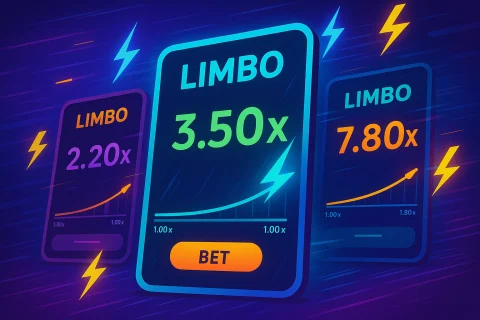
HiLo shares its risk-versus-multiplier choice with Dice, Mines, Plinko and Limbo. For a guide to limits on any instant game, read the best instant games for mobile players.
Mobile casinos with instant games
-
- Bonus
- K 50,000 + 150 FS
- Wagering
- –
- You must wager
- –
- Expected value
- –
18+ · T&Cs Apply · Play Responsibly -
- Bonus
- K 40,000 + 300 FS
- Wagering
- –
- You must wager
- –
- Expected value
- –
18+ · T&Cs Apply · Play Responsibly -
- Bonus
- 50 FS
- Wagering
- –
- You must wager
- –
- Expected value
- –
18+ · T&Cs Apply · Play Responsibly -
- Bonus
- 41,000 ZMW + 150 FS
- Wagering
- 25x
- You must wager
- K1,027,160
- Expected value
- +K58
18+ · T&Cs Apply · Play Responsibly -
- Bonus
- 30 FS
- Wagering
- –
- You must wager
- –
- Expected value
- –
18+ · T&Cs Apply · Play Responsibly
FAQ
How do you play HiLo?
Guess whether the next card will be higher or lower than the one showing. Correct guesses multiply your stake. You can collect after any win, and a wrong guess loses the round.
Which cards are the safest to bet on?
Aces, 2s, queens and kings, where one direction wins 11 or 12 times in 13. The multipliers are small to match.
Can I count cards in HiLo?
Only in the rare versions that deal from one deck without reshuffling. Most casino HiLo games draw each card from a full deck, so past cards do not matter.
What is the house edge in HiLo?
It is built into each multiplier and is usually a few percent below fair odds. The rules screen often lists the RTP.
When should I collect?
At a point you set before the round. Each extra guess risks everything won in the chain.
Does the suit of the card matter in HiLo?
No. Only the rank counts, from ace as 1 up to king as 13. Hearts, spades, clubs and diamonds all have the same effect on the odds.
What happens if the next card has the same rank?
It depends on the game. Some versions count a same-rank card as a loss, while others offer a separate bet on it. The rules screen of the version you play states which one applies.
Is a longer chain worth the risk?
A longer chain pays more, but its chance of success shrinks with every guess. Two correct guesses at about 46% each happen roughly one time in five. Decide your collect point before the round and stick to it.
Is HiLo a game of skill or luck?
HiLo is a game of chance. The skill lies in reading the odds on screen, setting a stake and sticking to a collect point. No choice changes the chance of the next card.
Is HiLo fair on mobile casinos?
HiLo is fair when each card is picked at random and the multipliers match the stated odds. Provably fair versions let you verify a round afterwards. The house edge still applies to every guess.
What RTP does HiLo have?
It depends on the version. The rules or info panel of the game states the RTP, and the house edge is the part that remains. Check it before you stake, and compare it with other high RTP mobile games if you want a higher return.
Can I play HiLo for free first?
Some lobbies offer a demo mode that uses play money. A demo lets you see the multipliers and the same-rank rule without risk. Results in a demo do not predict real play, because streaks mean nothing in either mode.
How many correct guesses should I aim for?
One or two is a common limit for players who want to keep the chance of success high. Each extra guess lowers the chance of finishing the chain. Pick the number before the round and keep to it.